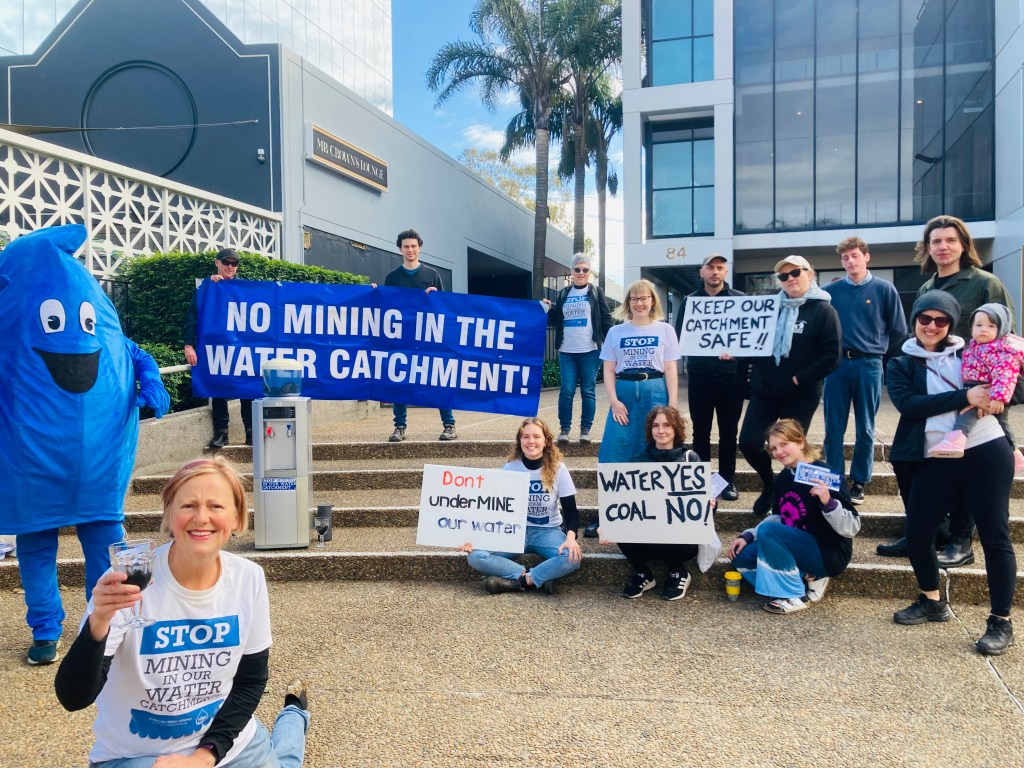
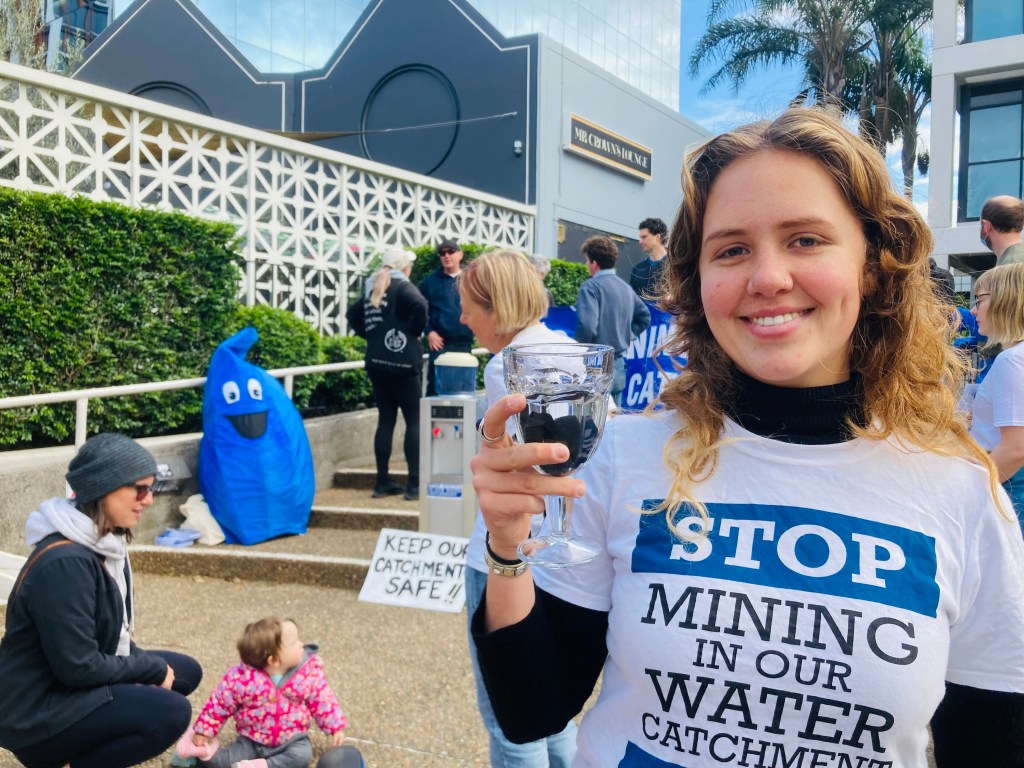
Protect Water, Protect Workers: community rally outside Planning Minister’s Wollongong office

Dharawal Country, New South Wales — Community group Protect Our Water Alliance (POWA) will hold a community rally outside NSW Planning Minister Paul Scully’s Wollongong office tomorrow (Wednesday) morning at 8am. This follows an announcement earlier this month by mining company Wollongong Resources that they are closing their Russell Vale and Wongawilli Collieries, laying off over 50 workers in the process. 

Russell Vale Colliery has been plagued by environmental and safety concerns in recent years, with both frequent pollution of Bellambi Creek and frequent underground friction ignition incidents. The NSW Resources Regulator closed the mine due to safety concerns earlier this year. There is a $12 million bond held with the NSW Government for mine rehabilitation. However, the mine’s own consultants estimated in 2018 that it will actually cost $200 million to adequately rehabilitate the mine site.

POWA spokesperson Dr Rada Germanos said “We are at Paul Scully’s office to demonstrate that the local community wants a robust transition plan for the mine workers of this region. There are still two more active coal mines within the greater Sydney water catchment – these both have an uncertain future, and really no place in the future of the region. We’ve seen sudden job losses at Russell Vale Mine, amidst a cost of living crisis.”

“Furthermore, we need these mine sites properly rehabilitated, so they don’t continue to draw down drinking water and trash local waterways. The beautiful Illawarra escarpment has been treated as a quarry for the last 200 years, and we have seen the damage that mining has and continues to cause, both to the escarpment areas and to our suburban creeks and green corridors. Will the Planning Minister allow Wollongong Resources to cut and run without footing the bill to properly clean up the Russell Vale and Wongawilli mines?”

“The community deserves better, we know change is coming. There are many job opportunities in the region for a green transition, and in ensuring these mines are properly rehabilitated – the Illawarra needs a solid plan to support workers and repair the environments that sustain us.

“We’re calling on Planning Minister Scully to protect workers and protect water”

Media Release: New report details damning environmental destruction by Dendrobium Mine

Wollongong, New South Wales — Confronting images of recent environmental destruction by South32’s Dendrobium Mine have come to light, showing cracked streams and rockfalls within the Special Areas of the Greater Sydney Water Catchment. The mining multinational published its Longwall 17 End of Panel Report (1) earlier this year, documenting the immediate environmental impacts of this particular area of mining in Area 3b. 

Detailed in this report are impacts on streams, creeks, upland swamps, access roads, water losses, as well as documented Aboriginal heritage sites. The report documents 40 identified new surface impacts, 75% of which were on “natural features”.

South32 recently withdrew its application for a 20 year extension to the Dendrobium Mine, but will continue to conduct longwall mining within the water catchment for several more years.

Protect Our Water Alliance (POWA) spokesperson Dr Rada Germanos said “This report provides us with real-time evidence of the horrific damage that South32 is causing within our water catchment. It is incredible to read such a long document that lists cracked stream after cracked stream, dry swamp after dry swamp, and realise that all of this destruction has been approved by the Department of Planning.”

“Furthermore, only two of the five documented Aboriginal heritage sites were visited in the post-mining survey. First Nations people have said time and time again that longwall mining affects the cultural integrity of the landscape, and here we see an incredibly poor effort by South32 to even bother to acknowledge their destruction of these places.”

“While water drinkers in Sydney and the Illawarra are relieved that the expansion of the Dendrobium Mine will not go ahead, we remain deeply concerned that damage to our water catchment continues every day until the mining ceases.

This consent to destroy has been provided by successive NSW Governments. It is simply not good enough to allow multinational companies to trash these ecosystems, and document their destruction in these dry, detached reports. As the 2023 State Election draws closer, we ask, do the Labor or Liberal parties care enough about clean drinking water for the 5 million people of Greater Sydney to overhaul our planning laws, and stop this destruction by stopping mining in our water catchment?”

DENDROBIUM BITES THE DUST – South32 cancels expansion plan

In a surprise announcement this week, South32 have abandoned their plans to expand the Dendrobium Mine. Workers at the mine were apparently told this news via text message.

While South32 has admitted the expansion did not stack up economically — a something POWA has been questioning for some time — its also clear that the strength of opposition to this expansion over the last 3.5 years in the Illawarra has played no small part.

POWA held a celebratory demonstration outside the NSW Department of Planning, Industry and Environment office in Wollongong today.

A HUGE thank-you to all of you who helped in this fight ❤

POWA one of 35 groups to endorse “Emergency Climate Action: No more coal and gas; 43% carbon emissions cut by 2030 is not enough” rally in Sydney today

From Green Left Weekly:

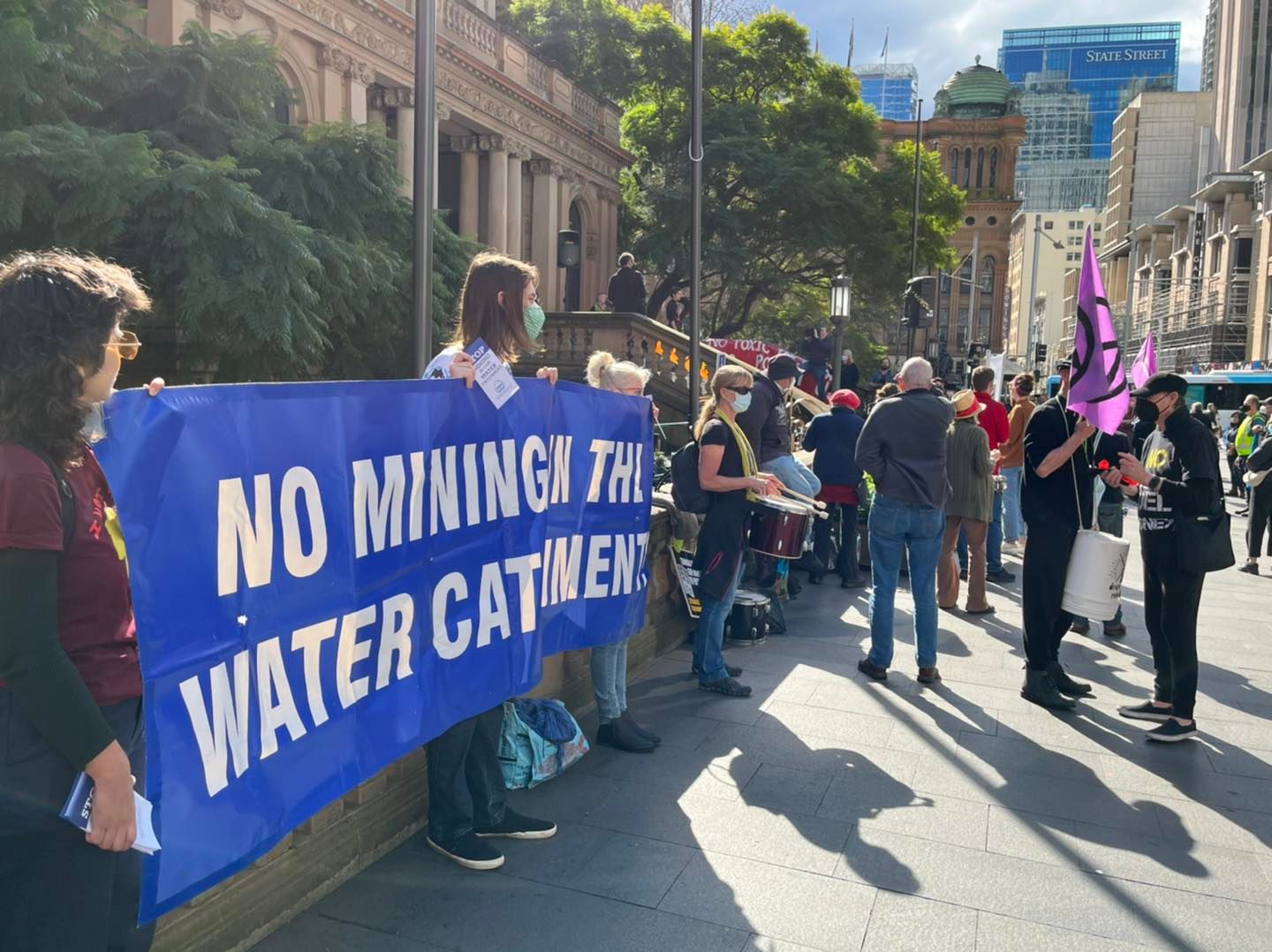
Climate activists from 35 grassroots groups came together for a march on August 7 to send a strong message to the Anthony Albanese Labor government that its recently legislated 43% cut to emissions by 2030 target is not enough to avert catastrophic climate change.

Climate scientists say Australia should set a target of 75% emissions cut by 2030.

The marchers demanded:

  • No new fossil fuel projects, including Kurri Kurri, Narrabri, Beetaloo and Burrup Hub;
  • Stop the power companies profiteering: 100% publicly owned renewable energy by 2030;
  • Climate jobs and a just transition now;
  • First Nations justice: Stop Santos’ attack on Gomeroi Native Title;
  • Defend the right to Protest: stop police repression of climate protesters; and
  • Protect ecosystems and stop logging native forests.

The march was endorsed by: Fireproof Australia; Knitting Nannas Sydney; NSW Nature Conservation Council; Protect Our Water Alliance; Amnesty International Australia; Stop Adani Sydney; Water for Rivers; Maritime Union Australia Sydney; Greens; Socialist Alliance; Extinction Rebellion Drummers; No Incinerator for Western Sydney; Wage Peace and Disrupt Wars; Sydney Extinction Rebellion; Stop Coal Seam Gas Sydney; Justice Action; Bob Brown Foundation; Sydney Industrial Workers of the World; Rank and File Action (Sydney University); Uni Students for Climate Justice; Kids Against Gas; Australian Mothers Against Gas; Western Sydney Direct Action; NSW GasBan; North West Protection Advocacy; Latin America Social Forum; No more incinerators Matraville; Workers for Climate Action; National Tertiary Education Union Sydney University branch; National Union Students; Black Flag Sydney; Lithgow Environment Group; Democratic Kurdish Community Centre of NSW; and Save the Bay.

Speakers included: Rilka from Blockade Australia, NSW Greens MLC Abigail Boyd; Veronica Koman, from Amnesty International Australia; Maritime Union Australia Sydney branch secretary Paul Keating; Dr Rada Germanos, from Protect Our Water Alliance (POWA); Dorothee Babeck, from the Bob Brown Foundation; and Paddy Gibson.

Illawarra Mercury: $15k fine for Helensburgh mine’s water pollution ‘not enough’ for environment

Environmentalists say a $15,000 fine handed to coal miner Peabody in June for polluting a creek that leads into the Royal National Park is inadequate, and won’t protect the waterways as potential habitat for reintroduced platypus.

The penalty from the Environment Protection Authority was given to Peabody after its failure to properly maintain a dam at its Metropolitan colliery at Helensburgh allowed polluted water to run off into the Camp Gully Creek during heavy rains in January.

The creek flows into the Hacking River then into the national park.

Sutherland Shire Environment Centre spokesperson Dr Catherine Reynolds said the area was potential platypus habitat but members had been raising concerns about mine runoff for years.

“The Royal is one of Australia’s best loved national parks yet there is coal visible on the banks of the Hacking River,” she said.

Kaye Osborn of the Protect Our Water Alliance (POWA) said fines for mining pollution must be higher if they are to provide a genuine disincentive.

Read the full article here

Watch: Reasons we object to the Dendrobium Mine Expansion

In this webinar we talk about the 20 year Dendrobium expansion plan’s impacts.

This video includes short presentations on the impacts on koalas, your water catchment, our climate, Aboriginal cultural heritage and the economy.

On June 14th, submissions to the Department of Planning close on South32’s Dendrobium Mine Expansion. This is a unique red-carpet process for a coal mine in NSW. It’s up to us to fight it! We encourage you to make an original submission – focus on what makes you mad and sad, what matters to you.

Lodge your submission here: https://pp.planningportal.nsw.gov.au/…

See POWA’s submission guide here: https://protectourwateralliance.org/2…

Many thanks to Lock the Gate and Protect Our Water Catchment Inc. for these presentations.

WATCH POWATalks #3 – What does sustainable water infrastructure look like? With Prof Stuart Khan

Dr Stuart Khan responds to the question: what does sustainable water infrastructure look like in this, the final talk in POWATalks Autumn series on May 17th, 2022. Stay tuned for the interesting Q&A with the audience too.

Dr Stuart Khan is a Professor at the School of Civil & Environmental Engineering at UNSW. His research focuses on the presence, implications and treatment of contaminants in water systems including drinking water, wastewater, recycled water and the environment. In this presentation, Stu shares his knowledge on sustainable water infrastructure, and the why maintaining a healthy, thriving catchment is so important.