
Metropolitan Mine wants to expand its coal mining in our water catchment
Please join us in writing a submission to object to this expansion.
It can be as long or short as you like, but it needs to be in your own words and state
clearly that you object to Modification 4 – Longwalls 317 and 318, Metropolitan
Colliery.
How to make a submission
- Submissions are due on 26 August 2025.
- Submissions need to be made on the NSW Major Projects website, which is
where you’ll find all the details and documents regarding the expansion:
https://pp.planningportal.nsw.gov.au/major-projects/projects/modification-4-longwall-317-and-318-modification - Click on MAKE A SUBMISSION.
- You need to make an account in order to make a submission.
- Your submission can be typed in or can be attached as a document.
- The Planning website can be slow and it will be down for maintenance on 25 August, so please leave plenty of time to make your submission.
- Make sure you clearly state that you OBJECT to the Modification. If you don’t, your submission may be treated as a neutral comment.
- Your submission could be as short as a couple of sentences or as long as a thesis, but it must be unique; many form letters are counted as only one objection.
Background and Reasons for Objection
There are many reasons to object to this proposal. Here are just a few….
1. Threat to Sydney and Illawarra’s Water Catchment
This modification proposes continued coal mining within the Special Areas of the
Woronora Catchment — a critical drinking water source for over 5 million people,
including the Sutherland Shire, northern suburbs of Wollongong, and
communities such as Helensburgh, Engadine, and Lucas Heights.
The longwall panels are located alarmingly close to the Woronora Reservoir, which
is a crucial asset for regional water security. Longwall mining is known to cause
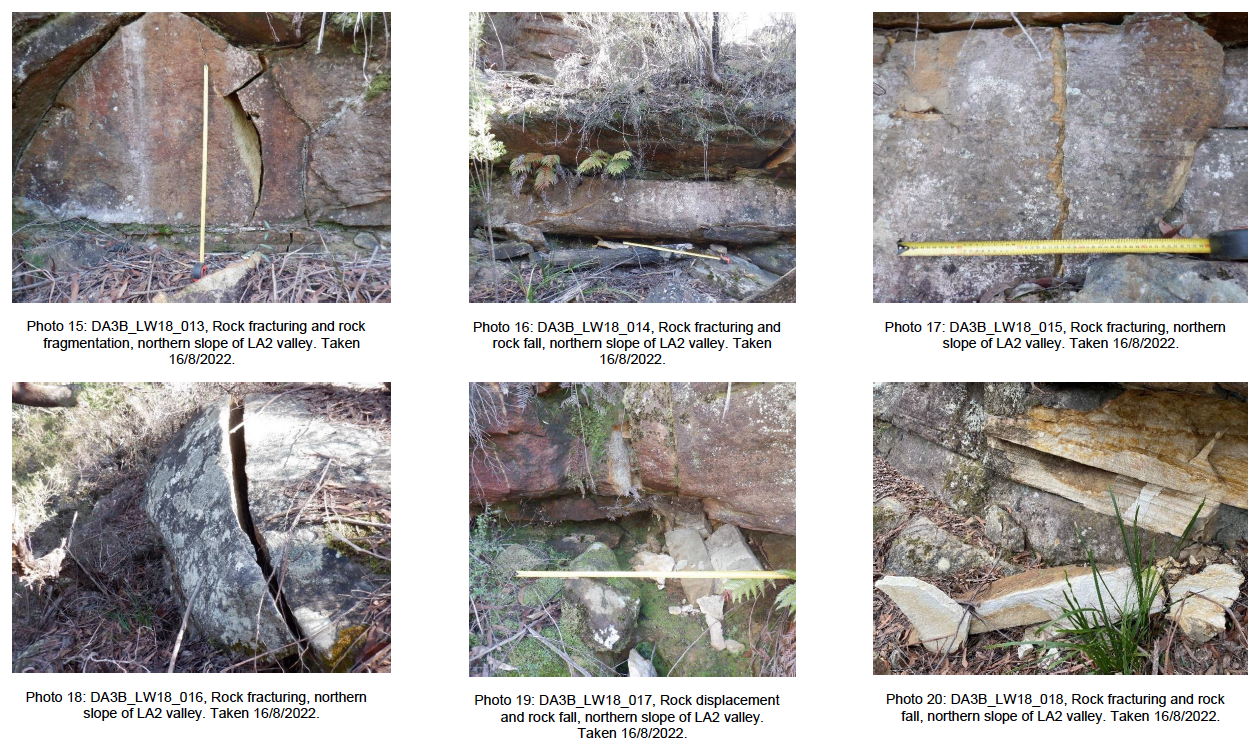
subsidence, fracturing of rock layers, and irreversible damage to watercourses,
reservoirs, and upland swamps(1).
The proposed modification places swamps including Swamp S106 at risk.
Swamps are vital to the health of the catchment: they absorb water during heavy
rainfall, store it, and gradually release it during dry periods. Their destruction
undermines long-term drought resilience and compromises clean water supply.
2. Biodiversity and Threatened Species at Risk
This modification threatens the habitat of several vulnerable and critically
endangered species, including:
- Bynoe’s Wattle (Acacia bynoeana) – Vulnerable
- Pilotbird (Pycnoptilus floccosus) – Vulnerable
- Prickly Bush-pea (Pultenaea aristata) – Vulnerable
- Swift Parrot (Lathamus discolor) – Critically Endangered
- Thick-leaf Star-hair (Astrotricha crassifolia) – Vulnerable
- White-throated Needletail (Hirundapus caudacutus) – Vulnerable
- Woronora Beard-heath (Leucopogon exolasius) – Vulnerable
This area is part of a fragile and unique ecological zone. Any additional disturbance
or habitat degradation caused by mining-induced subsidence or pollution will
accelerate the decline of these species and further erode the region’s biodiversity.
We are in a biodiversity crisis and this damage is unacceptable.
3. Economic Claims and Corporate Conduct
The proponent, Peabody Energy, is a U.S.-based multinational that pays no
corporate tax in Australia, despite earning substantial profits from its Australian
operations (2).
Peabody also has a record of poor treatment of workers:
- In 2020, it unlawfully dismissed workers at the Metropolitan Mine — a case the High Court ruled was unfair dismissal (3).
- More recently, it locked out its workforce following a one-hour protected industrial action (4).
We recognise the value of employment in the region. However, it is unjustifiable to
compromise a vital water catchment for limited short-term employment, especially
when workers could be supported to transition into sustainable industries.
4. Climate Impact of Ongoing Coal Extraction
While the Metropolitan Mine extracts metallurgical coal used in steel production, its
climate impact remains significant.
- In FY2024, Metropolitan’s Scope 1 emissions (direct from mining operations) reached nearly 700,000 tonnes of CO₂-equivalent — its highest on record since the Safeguard Mechanism began in 2016.
- Over 80% of these emissions were methane, a potent greenhouse gas with 86 times the warming potential of CO₂ over 20 years.
- Metropolitan is now the fifth highest Scope 1 emitter among all coal mines in NSW.
NSW is not on track to meet its net zero targets. Continuing to approve
expansions of high-emission mines, regardless of coal type, undermines our climate
commitments.
5. Planning Integrity and Approval Process
The current mine footprint was originally approved in 2009 by then Labor NSW
Planning Minister, Kristina Keneally. At that time, the implications of climate
change, water security, population growth, and biodiversity collapse were far less
understood or prioritised.
The ongoing use of a modification pathway to prolong mining operations under an
outdated approval process is unacceptable. A proposal of this type — with serious
environmental and public interest concerns — must undergo a full Environmental
Impact Statement and fresh assessment under current laws and science.
Consistent with Labor government promises both before and after the most recent
election, Metropolitan Modification 4 must also be referred to the Independent
Planning Commission of NSW for an independent and transparent assessment.
References
- Independent Expert Panel for Mining in the Catchment (IEPMC), Final Report, 2019.
- Corporate tax avoidance. Who helps fund Australia, and who doesn’t? – Michael West
- https://www.abc.net.au/news/2025-08-06/high-court-helensburgh-coal-sacked-workers-ruling
- https://www.actu.org.au/media-release/us-multi-national-locks-out-coal-
miners/?fbclid=IwY2xjawMKMahleHRuA2FlbQIxMQABHmtD0ZSwcoi_GMgmC9HTR82-
qZEV4GQwSl6DvRzz0H_TRvUX9kTfB1-mw-3R_aem_AG0N0ZCkrzaisTYkN4CYOw
Guide to making a submission
✍️ Submission Writing Guide: Objecting to Metropolitan Mine Modification 4
Longwall 317 and 318 Modification
This guide will help you write a personal and effective submission to the NSW
Department of Planning, objecting to the proposed expansion (Modification 4
Longwall 317 and 318 Modification) of the Metropolitan Coal Mine near
Helensburgh.
- You don’t have to include everything — just focus on what matters most to you. Even a few sentences is great.
- Make sure to clearly state at the beginning that you object to the proposal.
1. Your Connection to the Area (1–2 sentences)
Start with a short explanation of who you are and why you care about this issue.
Prompt examples:
- Do you live near Helensburgh, the Royal National Park, or the Illawarra?
- Do you use or rely on water from the Woronora Reservoir?
- Do you care about protecting natural areas in the Illawarra and/or in NSW?
“I live in the Sutherland Shire and deeply value the Royal National Park and the
critical role the Woronora Reservoir plays in providing safe drinking water to the
region. I am seriously concerned that the proposed mine expansion poses an
unacceptable risk to the long-term security of our drinking water supply.”
2. The Importance of the Greater Sydney Water Catchment
This project is close to the Woronora Reservoir, which is part of Sydney’s drinking
water catchment. You can express concern about water pollution, water loss, or
risk to supply.
Prompt examples:
- Why is safe, clean water important to you?
- Are you worried about mining under or near the reservoir or catchment land?
- Do you think it’s appropriate to mine in drinking water catchment areas?
“The Woronora Reservoir is a critical part of Sydney’s drinking water supply. I
believe coal mining so close to, and even underneath, our catchment land is
irresponsible. The risks to water quality and supply are too high.”
3. Your Environmental Concerns (list or paragraph format)
Think about any environmental values or issues that matter most to you. This could
be related to biodiversity, native animals, upland swamps, or water pollution.
Prompt examples:
- Are you concerned about damage to swamps or rivers?
- Do you care about the plants and animals in the area?
- Do you know the area is home to protected ecosystems and Aboriginal
- heritage sites?
- Do you worry about pollution reaching the Royal National Park?
“Upland swamps are fragile and vital ecosystems. Mining underneath them puts
them at extreme risk of drying out or collapsing. These swamps cannot be replaced.”
4. Climate & Emissions Concerns
This mine is one of the highest methane emitters in NSW. You can include
concerns about coal mining’s role in climate change.
Prompt examples:
- Should we still be expanding coal mining in 2025?
- Do you feel the government should be doing more to reduce emissions?
- Are you concerned about bushfires, heatwaves, or other climate impacts?
“As we face increasing climate extremes, it’s unacceptable to expand a high
emission coal mine. This mine produces significant methane and contradicts the
NSW Government’s Net Zero targets.”
5. Social & Strategic Issues
You may wish to comment on the broader economic or political context.
Prompt examples:
- Do you think it’s time to move away from coal?
- Should we be supporting workers to transition to new industries?
- Are you concerned that a foreign-owned company profits while risking local resources?
- Do you believe long-term environmental costs outweigh short-term coal profits?
“We need to support coal communities in a fair transition, not lock them into more
years of damaging mining. Expanding this mine benefits a foreign-owned company
while putting our local environment and future at risk.”
6. Your Clear Objection
End by clearly stating again that you object to the project and want it to be
refused.
“For the reasons above, I strongly object to Modification 4 Longwall 317 and 318
Modification of the Metropolitan Mine. I urge the Minister to reject this proposal in
order to protect our water, environment, and climate.”
Ready to Submit?
- Go to the Planning Portal: https://www.planningportal.nsw.gov.au/major-projects/projects/modification-4-longwall-317-and-318-modification
- Click “Make a submission” and follow the prompts to either log in or create an account. Your submission can either be typed in or uploaded as a document.
- Make sure to submit before 26 August 2025.
- Note: the website can be slow and it can take time to create an account. It will also be down for maintenance on 25 August so don’t wait until the last minute!
Thank You
By writing your own submission, you’re helping to protect our water catchment,
ecosystems, climate and future generations.
 Protect Our Water Alliance